Finite State Machines vs Behavior Trees
Finite State Machines (FSMs) and Behavior Trees are two of the most widely used approaches for organizing gameplay and AI logic. While they are sometimes treated as interchangeable or competing techniques, they are designed to solve different layers of system logic and excel at different types of problems.
Finite State Machines focus on state control which manages distinct modes of behavior and defining how systems transition between those modes. Behavior Trees focus on decision-making which continuously evaluating conditions and selecting the most appropriate action based on the current situation.
Rather than replacing one another, these approaches are often most effective when used together as layered systems: one responsible for controlling structured flow, and the other responsible for choosing what should happen next.
State Control vs Decision-Making
At a high level, these paradigms address two separate concerns:
- State control: managing which mode, phase, or state is currently active.
- Decision-making: determining what action should occur based on conditions
Understanding this separation helps clarify when each approach is most effective.
Finite State Machines : State Control Systems
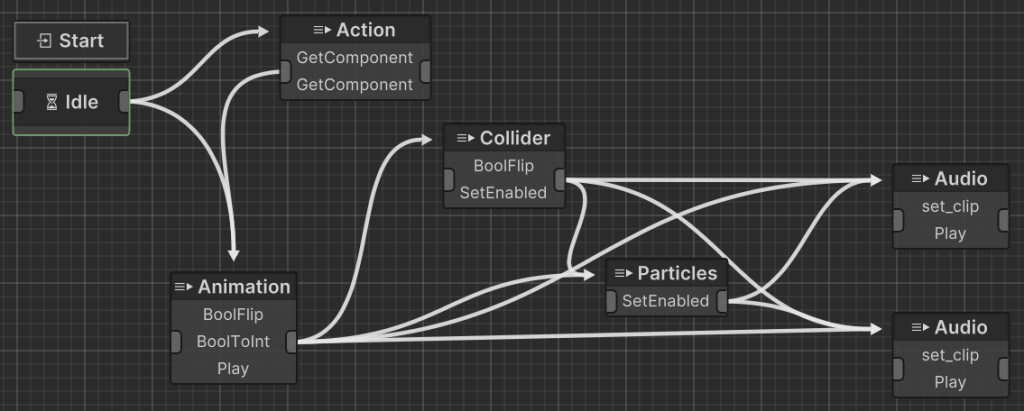
Finite State Machines are designed around distinct states and explicit transitions between them. Each state represents a stable mode of operation, and transitions define when and how behavior changes. FSMs are particularly strong at:
- Managing predictable flow and sequencing.
- Enforcing clear modes or phases of behavior.
- Handling entry and exit logic explicitly.
- Representing structured state-based systems.
They are ideal when gameplay or AI behavior is organized into well-defined stages or modes.
Behavior Trees : Decision-Making Systems
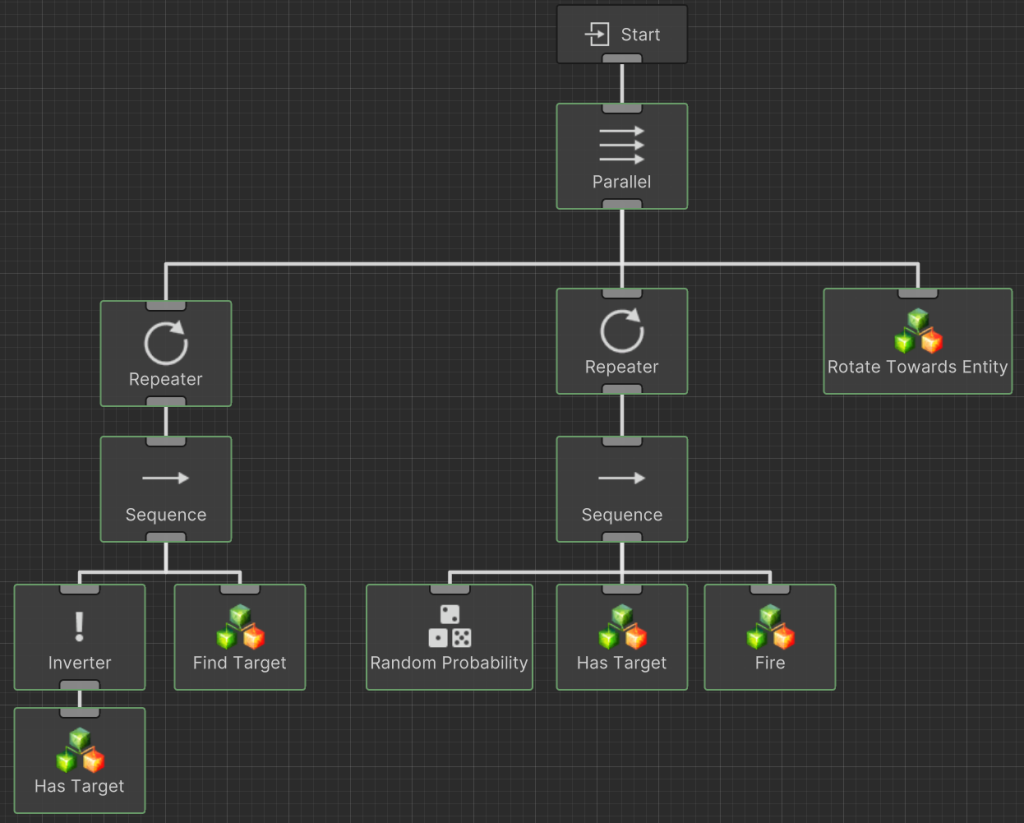
Behavior Trees are designed around evaluating conditions and selecting actions dynamically. They continuously reassess the game state and determine the most appropriate behavior to execute. They are particularly strong at:
- High-level decision-making.
- Priority-based behavior selection.
- Reactive systems that adapt to change.
- Complex branching logic
Behavior Trees work best when multiple possible actions must be chosen based on context.
Core Differences
| State Control (FSMs) | Decision-Making (Behavior Trees) |
|---|---|
| Manage distinct modes or phases | Select actions dynamically |
| Explicit transitions between states | Continuous condition evaluation |
| Structured and predictable flow | Flexible and reactive behavior |
| Stable execution within states | Dynamic branching logic |
| Clear entry and exit behavior | Priority and fallback handling |
When to Use a State Control System
Use a Finite State Machine when:
- Behavior is organized into clear modes or phases.
- Flow follows predictable transitions.
- Entry and exit logic must be explicit.
- Sequenced or staged behavior is important.
Common examples include animation systems, gameplay phases, boss fight stages, and mode-based logic.
When to Use a Decision-Making System
Use a Behavior Tree when:
- Multiple actions are possible at any time.
- Logic depends on changing conditions.
- Priority and fallback behavior is required.
- Systems must adapt dynamically.
Typical examples include AI behavior selection and complex reactive gameplay logic.
Using Both Together
In many systems, state control and decision-making are layered together:
- A decision-making system determines which state should become active.
- A state control system manages what happens within that state.
This separation keeps logic clear, scalable, and easier to reason about as projects grow.
Why Finite State Machines with State Designer?
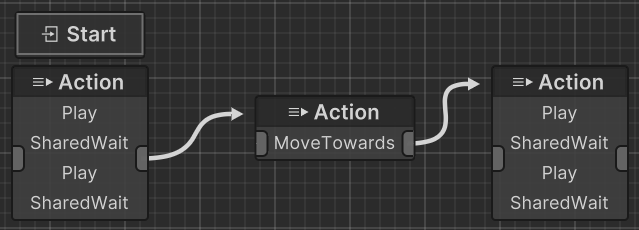
Finite State Machines and Behavior Trees address different aspects of gameplay logic:
- Finite State Machines provide state control: Managing modes and structured flow.
- Behavior Trees provide decision-making: Choosing actions based on conditions.
By separating these responsibilities, systems become more maintainable, predictable, and easier to extend. State Designer focuses on state-driven control systems, providing a visual environment for building clear, scalable finite state machines. It is optimized for managing flow, transitions, and structured behavior while keeping state logic easy to understand and maintain.